
Troy, MI · Garage Door Service
Weather Seals and Drafts in Troy Garage Doors
Troy homes built mostly between 1938 and 1960 lose heat fast through worn garage door seals. Here's what the cold does to doors in this service area and what repairs cost.
- Repairs & new doors
- Springs & openers
- Serving 5 nearby communities
The Seasonal Bit
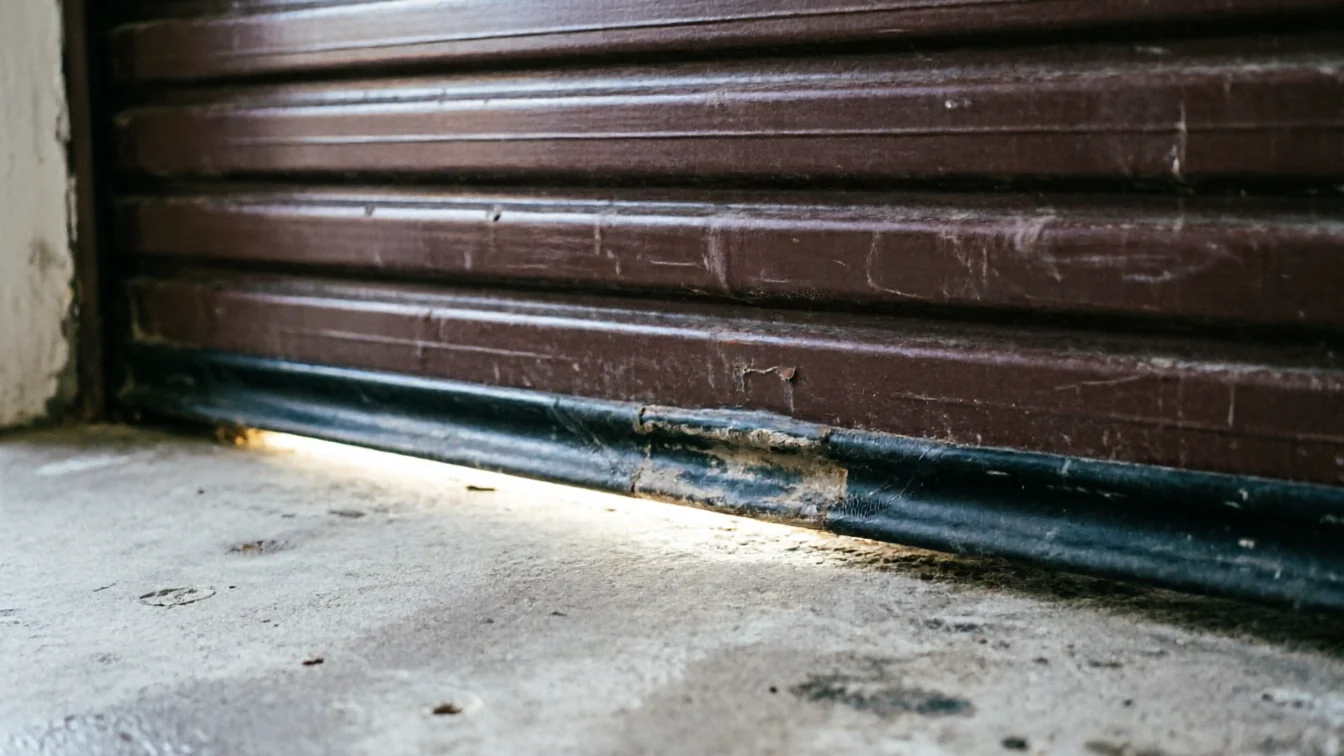
Troy sits in a cold-severe climate band, and that shapes what happens to a garage door every winter whether the owner notices or not. The bottom seal is the first thing to go. Rubber that was fine in October turns stiff by January, and once it cracks at the corners, cold air finds the gap and rides it straight into the slab. On a lot of the older houses here, the door opens onto an unheated garage that shares a wall with a mudroom or laundry, so that draft doesn't stay in the garage. It moves into the house.
The freeze-thaw cycle is the other half of it. Water gets into a hairline gap in the weather seal, freezes overnight, expands, and widens the gap by a fraction more. Do that forty or fifty times over a winter and a seal that looked serviceable in November is shot by March. We see this pattern every year across the service area, and it's not a defect in any one door - it's what cold-severe weather does to rubber and vinyl seals over time, full stop.
The Situation
Housing stock here runs from 1938 up through 2000, with a median build year around 1958, and that median matters more than people think. A door and track system installed on a house built in the late 1950s was speced for a different set of weatherstripping standards than what goes on a house built in the 1990s. Across the 42 named areas that make up this market, the pre-1960 stock is the majority, not the exception.
What that means in practice: a lot of these garages have jamb seals and header seals that were retrofit at some point, not original to the opening, and retrofits don't always seal as tight as a built-for-purpose track. We find gaps at the top corners more often on older openings than newer ones, simply because the framing has shifted a little over sixty-plus years and the seal was never recut to match. It's not a crisis. It's just a known weak point we check first on any house from that era.
What Local Conditions Do
Cold-severe conditions do three specific things to a garage door system, and all three show up on service calls in this area. First, the bottom seal hardens and cracks, letting in drafts at floor level - the complaint we hear most in January and February. Second, cold makes torsion springs more brittle, so a spring that's been due for replacement for a year tends to pick the coldest week to actually break. Third, metal tracks contract in the cold, and if the track was even slightly out of alignment in warmer months, that contraction is enough to make rollers bind or jump.
None of this is unique to one house. It's what the climate here does to standard residential garage door hardware, year after year, regardless of how well the door was installed. The honest limitation: we can reseal and realign, but we can't stop a 60-plus-year-old steel track from contracting in the cold. If the track itself is warped rather than just misaligned, resealing buys you a season, not a fix.
What You Pay
We don't have a flat number to quote here, because a bottom-seal replacement and a full weatherstrip-and-realign job on an older track aren't the same call, and pricing depends on what your door actually needs once we're looking at it. What we can tell you is what drives the cost: whether it's seal-only or seal-plus-track-adjustment, and whether the header seal needs recutting to match a shifted frame, which is more common on the pre-1960 houses that make up most of this area's housing stock.
Household income in the service area runs a median of $89,836, and most owners here treat seal and weatherstrip work as routine winter upkeep rather than an emergency repair - it's cheaper to catch a cracked bottom seal in November than to deal with a frozen, binding door in January. Call and describe what you're seeing - a visible gap, a draft you can feel standing next to the door, ice buildup at the threshold - and we'll give you a real number before any work starts.
Frequently asked questions
Why does my garage door let in cold air even though the seal looks fine?
On houses built before 1960, which make up most of the stock in this area, the opening has often shifted slightly over the decades. A seal can look intact but no longer sit flush against the frame, especially at the top corners, which is where we check first on older homes.
Does cold weather actually break torsion springs?
Cold makes the metal more brittle, so a spring that's already fatigued is more likely to snap in a cold-severe winter than in a mild one. It's usually a spring that was already near the end of its life, not a healthy spring failing out of nowhere.
Is it worth resealing an old door or should I replace the whole thing?
If the track is just out of alignment, resealing and adjusting usually solves the draft. If the track itself has warped from decades of freeze-thaw cycling, a reseal is a short-term fix at best, and we'll tell you that straight rather than sell you a seal job that won't hold.
Related garage door services in Troy
More garage door guides
Book garage door service in Troy
Call now or request a quote - tell us what the door is doing and where you are.