
Troy, MI · Garage Door Service
Why Troy's Older Garage Doors Struggle Each Winter
Troy Garage Door Pros fixes doors on homes built 1938-2000, where original hardware meets Michigan's severe winters and pre-insulation-code construction.
- Repairs & new doors
- Springs & openers
- Serving 5 nearby communities
The Seasonal Bit
Troy sits in a climate band that federal data classes as cold and severe, and that matters more for a garage door than almost anything else on the house. The door is the biggest moving opening in the building envelope, and it's the one most exposed to freeze-thaw cycling all winter long. Steel panels contract in deep cold, nylon rollers stiffen, and lubricant that worked fine in October turns gummy by January. None of that is unique to any one brand of door - it's physics acting on a slab of metal hung on springs outside an unheated space.
What we see on calls is predictable: openers straining because cold grease adds resistance, torsion springs losing a little tension as steel contracts, and weatherstripping that's cracked and letting wind through the bottom seal. If your door has felt heavier or slower to close since the temperature dropped, that's not your imagination - it's the cold doing exactly what cold does to steel and rubber. A door that runs fine in July and groans in February usually just needs lubrication and a tension check before the real cold sets in, not a replacement.
The Situation
Most of the housing around here went up between 1938 and 2000, with a lot of it clustering around 1958 - that's the median build year across the area. That puts a big share of garage doors either original single-layer steel or an early insulated-replacement unit from decades back, installed before current practice caught up with how cold this region actually gets.
Troy sits among more than two dozen nearby communities we also see similar housing stock in - places like Birmingham four miles off, Bloomfield Hills at five, Madison Heights and Berkley around six, Beverly Hills and Rochester near seven. Across this wider service area there are roughly 297,897 households and about 169,091 owner-occupied houses, a lot of them built in that same mid-century window. That's the backdrop for every repair call we take: not a generic 'garage door problem' but a door that was likely installed to a building code written before anyone worried much about thermal performance at the opening itself.
What Local Conditions Do
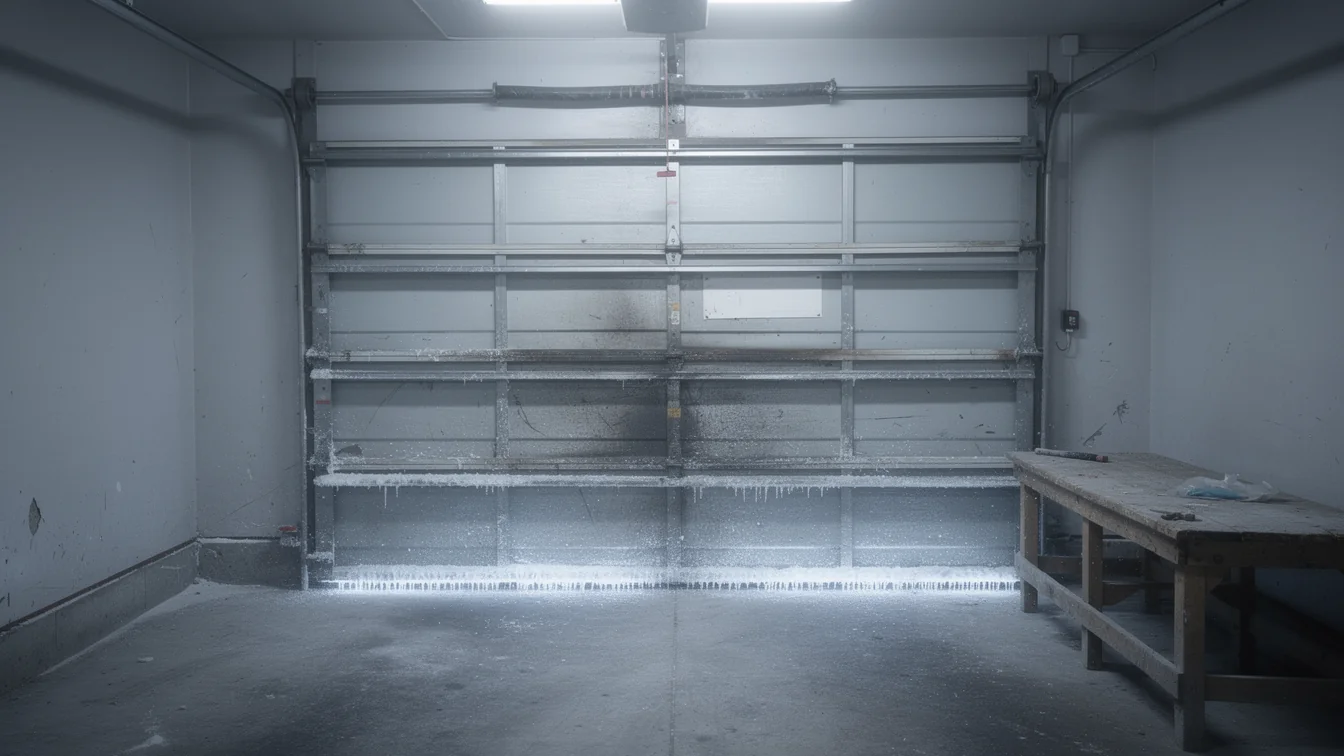
A house built before insulation rules tightened up usually got a garage door to match - thin steel, no thermal break, single-pane if there were windows at all. That combination does fine until the temperature swings hard, which is exactly what this climate band does every winter. The door itself becomes a cold bridge: condensation forms on the inside face, drips onto track hardware, and over years that moisture-and-freeze cycle pits springs and corrodes bottom brackets faster than a newer insulated door would show.
We also see it in the opener. Older openers weren't built with today's cold-start torque in mind, so a motor rated fine on paper can bog down trying to lift a door that's gone stiff from cold grease and a slightly sagging track. None of this means every older door needs replacing - plenty of original hardware is still sound and just needs the right seasonal service. But if a door on a house from that 1938-2000 window is showing rust at the bottom panel or a spring that looks stretched rather than coiled tight, that's the kind of wear this specific climate and this specific housing age produce together, not random bad luck.
What You Pay
We don't post flat prices here because a repair on a door from this era depends on what's actually on the house - original hardware, a replacement from twenty years back, and a newer unit all call for different parts and different labor. What we can say is that the area's median household income runs around $89,836, which tells you this is a market where people generally fix a door rather than let it sit broken, and where owner-occupied homes - about 169,091 of them across the wider service area - are the kind of asset people maintain rather than walk away from.
The honest limitation: if a door is old enough that parts are discontinued, sometimes the labor to chase down obsolete hardware costs more than swapping in a new section or opener would. We'll tell you straight when that's the case instead of running up a bill trying to save a door that's past the point of being worth saving. A phone call and a look at the actual hardware is the only way to give you a real number - anything quoted without seeing the door is a guess.
Frequently asked questions
Why does my garage door get harder to open in the winter?
Cold stiffens the grease on rollers and tracks and can reduce torsion spring tension slightly as the steel contracts. On a house in this area built before 2000, that effect is often more noticeable because the original hardware wasn't engineered for today's expectations around cold-weather ease of use. A seasonal lubrication and tension check usually solves it.
Is my door's age a problem on its own?
Not by itself. Plenty of doors from the 1938-2000 building window are still structurally sound. The issue is usually the lack of a thermal break or the condition of weatherstripping and springs after decades of freeze-thaw cycling, not the door's age as a number.
Do you give prices over the phone?
We'd rather look at the actual door than quote blind, especially on older hardware where parts availability varies a lot. Household income and home values in this area support getting things fixed right, but the real number depends on what's actually installed on your house.
Related garage door services in Troy
More garage door guides
Book garage door service in Troy
Call now or request a quote - tell us what the door is doing and where you are.